We assign specialists only when the methods and software match their experience.
About
A Research Team With a Careful Review Standard.
We keep our promises modest and our work careful. Every project is read first, matched to the right person, and checked before it goes back to you, so you can stand behind the result.
Watch
A Short Introduction to Stat.BD.
Why we started
Nobody Should Face Their Research Statistics Alone.
Across Bangladesh, students and clinicians have to do research for a thesis, a paper, or a degree, often with no one beside them when the statistics get hard. We started Stat.BD in 2026 to be that person: to teach research the way researchers actually do it, through real studies, from the design to the final table.
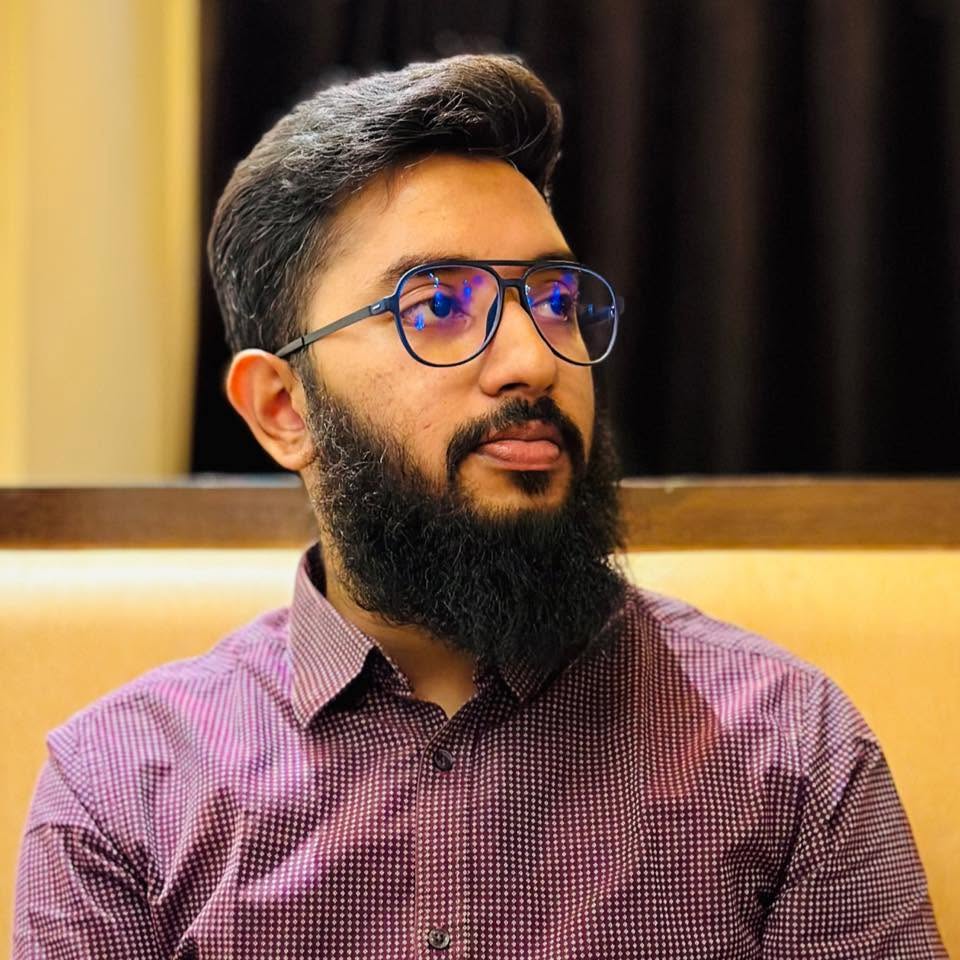
Md Muhtasim Munif Fahim Founder, Stat.BD
1,200+
of students and learners taught research and data analysis, one-to-one and in groups.
Open slides and class notesResearch team
Scoped Support, Not Generic Outsourcing.
Stat.BD connects each project with the statistics, survey, reporting, or software specialist who fits it. It is not one person quietly doing everything behind a brand name.
Most of us trained at the University of Rajshahi’s Department of Statistics and Data Science. Stat.BD itself is independent and is not an official unit of the university. The way we work is simple: scope the problem, assign the right person, explain the method, and keep our claims modest.
What we hand over should make sense without us there to explain it.
Sensitive, complex, or publication-bound work gets a second internal review before it leaves.
We can bring in more people when a project needs them. We still do not guarantee publication, grades, approvals, or funding.
Ownership and integrity
Your Work Stays Yours.
We do the analysis and reporting we agree to. The research, the data, and the final document stay yours.
You keep authorship. We provide tables, code, and notes. We do not write your thesis or paper for you, or put our voice in place of yours.
Your data and reports are yours. For organizations, the data, dashboards, and reports we produce belong to you. We do not reuse them for anyone else.
Declare outside help where required. If your university, journal, or funder asks you to declare statistical help, that is yours to do. On request, we write a summary of what we did and did not do.
Replication on request. Code, cleaned outputs, and a short methods memo, so you can rerun the analysis or explain it later.
Review standard
What Our Review Checks.
Every analysis project is checked inside the team before delivery. The check covers four things.
Methods that fit the data and the question, not methods chosen to reach significance.
Assumptions checked and limits stated. No p-hacking or selective reporting.
Outputs you can explain to a supervisor, reviewer, or client without us there.
A second reviewer on complex or publication-bound work.
How we fit in
Working Within Your Rules.
Students, researchers, and organizations each work under someone else’s rules. We plan the work around them.
Students
Department formats, chapter deadlines, and supervisor feedback are part of the plan. Outside support should strengthen your work, not sidestep your department.
Researchers
Journal reporting guidelines, ethics approvals, and reviewer rounds shape how we analyze and report.
Organizations
Donor templates, reporting cycles, and data protection needs set the format and the timeline.
Team approach
Right Assignment, Clear Outputs, Stated Limits.
Matched by Method
We read the topic, data, software, and deadline first, then assign the specialist whose methods fit.
A Second Review
Before anything goes back to you, a second reviewer checks the method, how the results are read, and the stated limits.
One Standard, Many Specialists
Classes, consulting, evaluation, dashboards, and specialist projects each go to the right person, held to the same standard.